
Most of our guests know Banderas Bay: humpbacks in the winter, marlin and sailfish offshore, a beach for lunch. Every season a few of them ask us the same question — where else in Mexico is worth a fishing trip? Our honest answer is a small town on the other side of the Sea of Cortez. This is our guide to fishing and blue whale season in Loreto, Baja California Sur, and to Loreto Star Adventures, the one-boat, family-run operator we recommend to anyone heading there.
Why Loreto belongs on a fisherman's map
Loreto sits on the Gulf of California about 350 kilometres north of La Paz, with the Sierra de la Giganta at its back and five islands in front of it. The water between the town and those islands is the Parque Nacional Bahía de Loreto — more than 2,000 square kilometres of protected sea that forms part of the UNESCO World Heritage site Islands and Protected Areas of the Gulf of California. Jacques Cousteau's line about this sea being "the world's aquarium" gets quoted to death, but the reason it gets quoted is that it is still true here.
For a fishing crowd, the important facts are these. The drop-offs and rocky points around the islands are minutes from the marina, not hours. The sea is sheltered by the islands, so mornings are usually flat. And Loreto was a fishing town for centuries before it was a tourist town, which means the captains running pangas out of it grew up on this exact water.
Getting there is easier than people assume. Loreto has its own international airport (LTO) with direct flights from Los Angeles and, seasonally, from Canada, plus domestic connections through Tijuana and La Paz. From Puerto Vallarta the usual route is a domestic hop or a flight via Los Angeles; many of our guests fold Loreto into a longer Baja trip that starts in La Paz or Cabo and drives up Highway 1.
The boat: Loreto Star, a shaded panga built for a whole day
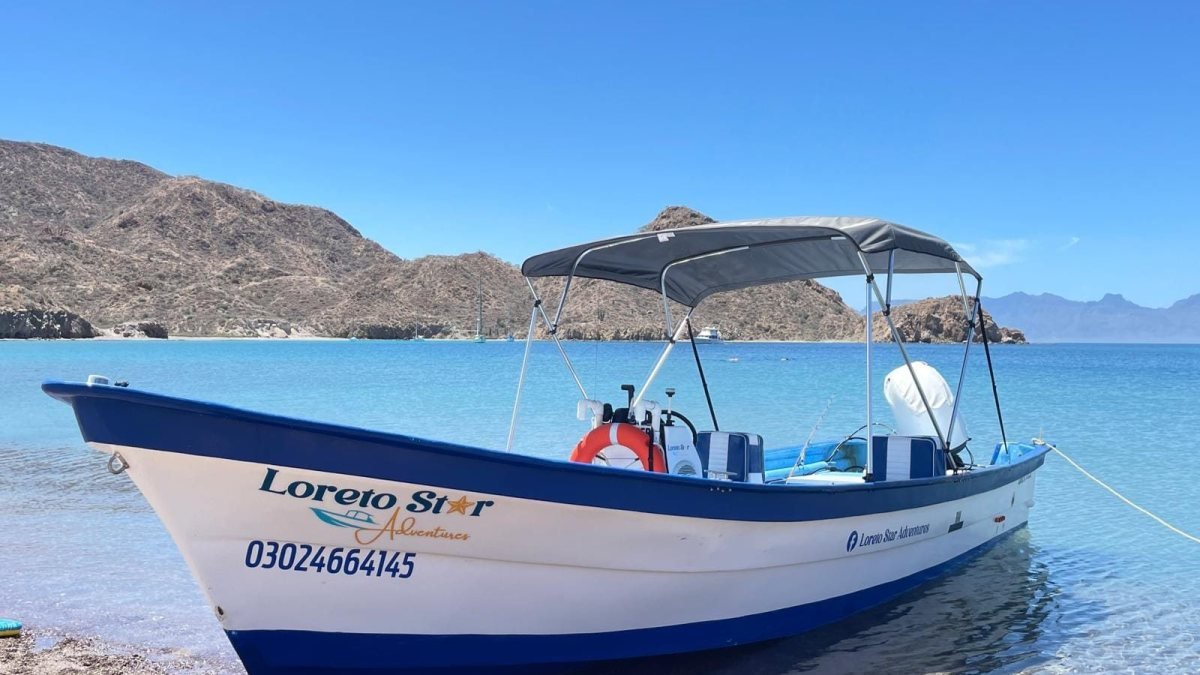
The Loreto Star is a classic Baja panga — the fast, stable open hull that local captains have run in the Sea of Cortez for generations — fitted out for comfort rather than a bare ride. A full bimini top shades the seating area on the way out, the bow is open for anyone who wants sun and spray, and she sits high on any island beach so you step straight onto the sand. She carries up to six guests, which is the honest sweet spot for a fishing group: everyone gets a rod, nobody is waiting their turn.
The operator's model is the one we like best: one boat, your group only, booked by the hour with a five-hour minimum. There is no shared departure, no fixed route and no printed itinerary. You book a private boat charter in Loreto and the day runs at your pace — another hour trolling if the dorado are biting, an early return if the kids have had enough. On board are a licensed local captain, life jackets in every size, rods, tackle and bait, bottled water and ice, and a beach set-up (shade tent, chairs and a cooler) for island stops.
Two things they are upfront about, which we appreciate: they do not publish prices on the website — you get a quote on WhatsApp for your dates and hours — and there is no online payment. You send a request, they confirm, and you settle with them directly. For a small operator on a small island town that is exactly how it should work, and it means the price reflects the season and the hours you actually want rather than a package someone else designed.
Fishing in Loreto: what bites, and when
If you fish Banderas Bay you already know the rhythm of a Pacific season. Loreto's is different, and it is worth learning before you book. The calendar below is what the Loreto Star crew fishes to, and you can read their fuller Loreto fishing calendar for the month-by-month detail.
Dorado (mahi-mahi) — June to October
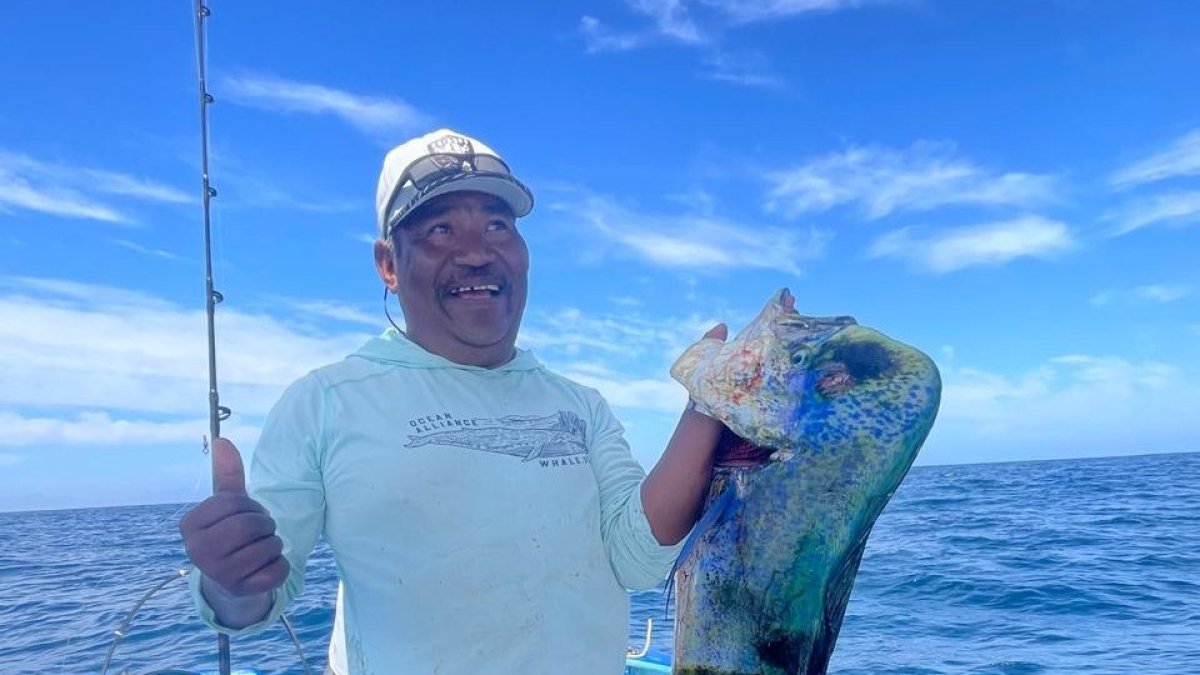
Loreto's signature summer fish. Fast, acrobatic and superb on the plate. The panga trolls the current lines and floating weed between the islands, and on a good July morning a six-hour charter can be a dorado clinic. This is the trip most anglers from Vallarta will recognise instantly — same fish, warmer and calmer water.
Yellowtail — December to April
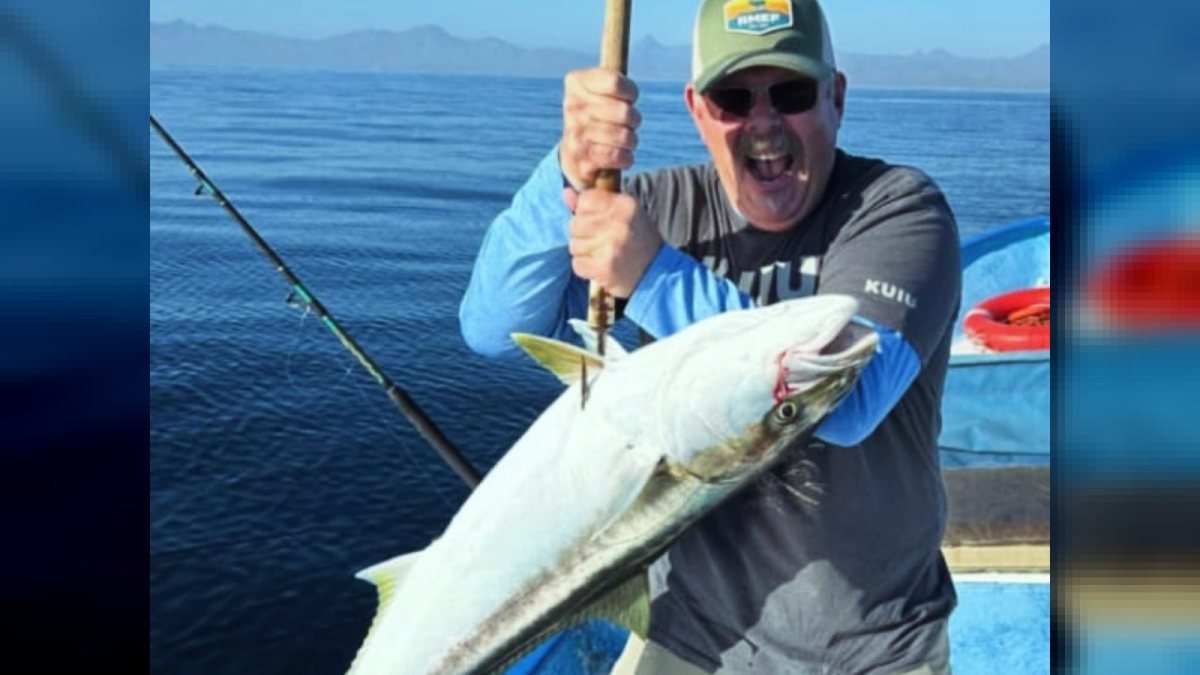
The winter target, and the reason Loreto stays a fishing destination when much of the Pacific coast goes quiet. Strong, hard-pulling fish on the high spots and rocky points around Isla Coronado and Isla del Carmen. Yellowtail season overlaps almost exactly with blue whale season, which is the whole point of the next section.
Roosterfish — May to October
Along the beaches and points, often in shallow water, and often in sight of the sand. A bucket-list fish for many anglers; Loreto Star releases every one.
Cabrilla, snapper and grouper — year-round
Bottom and rock fishing close to the islands. Steady action rather than one trophy, which makes it the best choice for families and mixed groups where not everyone is a hardcore angler.
Marlin and sailfish — July to October
Further offshore, which on a panga means a longer charter of eight hours or more. If billfish are the goal, say so when you book so the hours and the fuel are planned for it.
Licence, limits and the park bracelet
Anyone who fishes in Mexico needs a sport fishing licence, bought online by the day; the operator sends you the link when you book. The marine park charges a small daily bracelet fee per visitor, collected on the day and passed to CONANP, the park authority. Neither is included in the boat price, and both take minutes. The crew fillets your catch, and most restaurants along Loreto's malecón will cook it for you the way you like.
Blue whale season in Loreto: January to March
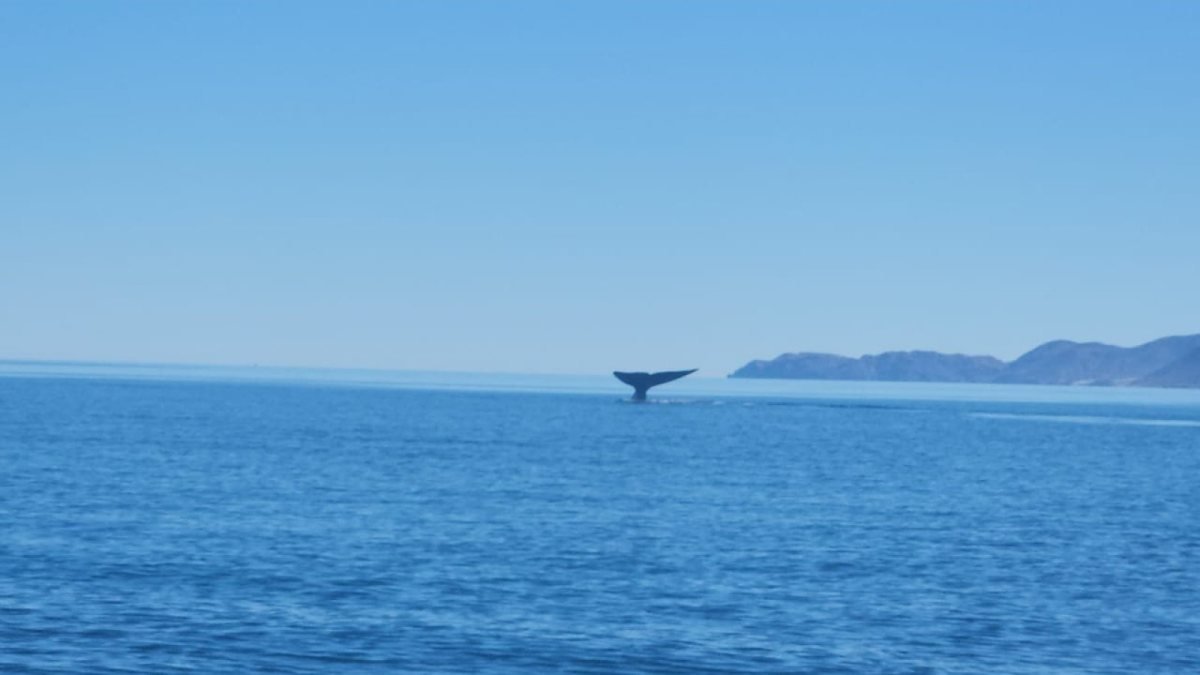
Here is the thing that makes Loreto genuinely different from every whale-watching trip you can do out of Vallarta. Banderas Bay gets humpbacks — wonderful, acrobatic, reliable. Loreto gets blue whales: the largest animal that has ever lived, a body the length of a bus and a half, surfacing to breathe in the deep, sheltered channel between the town and the islands.
Blue whales arrive in the Loreto area in mid-January and stay until late March, sometimes into early April, with February and the first half of March the most consistent weeks. Fin whales — the second-largest animal on the planet — are here over the same period, humpbacks pass through, and pods of common and bottlenose dolphins are around all year. Some winters bring orcas and pilot whales too. For the full picture read the crew's own guide to blue whale season in Loreto.
How a whale morning works on a private panga
A whale watching trip in Loreto on the Loreto Star leaves the marina around sunrise, because the Sea of Cortez is glassy in the morning and a blow is easy to spot from a long way off. The captain runs toward the channel where the whales feed, cuts the engine and waits. A blue whale surfaces for a few minutes, then dives for ten to fifteen, so a good trip is a rhythm of watching, waiting and repositioning. Five hours — the minimum — is the right length for a dedicated whale morning, and it leaves time for a swim at Isla Coronado on the way back. Six gives you a proper beach stop with lunch under the shade tent.
Whale watching inside the park is regulated, and this crew keeps to it: the distance the rules require, approaching from the side rather than from behind, never chasing, and letting the animal decide how close it wants to come. On a calm day that is often much closer than you expect.
The combination we tell people to book
Because yellowtail season and blue whale season overlap, the smartest winter charter in Loreto is whales at dawn, yellowtail before lunch, and Coronado's beach in the afternoon. Book six to seven hours and you get all three in one day on one boat. No fixed tour sells that; a private panga by the hour does it as a matter of course.
The islands: where the fishing and the beach day meet
Three islands are on the Loreto Star's regular run, all inside the national park, and each sets how many hours you need. Their island tours in Loreto page covers all three; here is the short version for someone deciding how to spend a fishing day.
Isla Coronado — the classic, 5 hours
A dormant volcano twenty minutes from the marina, with a white-sand beach on its sheltered side, a sea lion colony you can snorkel with and the clearest water in the park. The rocky side holds king angelfish, parrotfish, rays and the occasional turtle. If you only have one day in Loreto, this is it — the crew's complete guide to Isla Coronado explains why.
Isla Danzante — 5 to 6 hours
South of town: Honeymoon Cove, rock arches and a rugged, quieter island where the snorkelling is over rock reef rather than sand. The points around Isla Danzante fish well for cabrilla and snapper.
Isla del Carmen — 6 to 7 hours
The biggest island in the park: long empty beaches, the abandoned salt-mining town at Bahía Salinas, and the best chance of having a whole bay to yourselves. The high spots off Carmen are prime yellowtail water in winter.
A sample day: fish the morning, beach the afternoon
This is how the crew says most of their guests do it, and it matches what we would book ourselves.
- 06:30 — Meet at the Loreto marina. Coffee, life jackets, the captain's read on the last few days.
- 07:00 — Lines in on the run north. In winter, eyes on the horizon for a blow; in summer, trolling the current lines for dorado.
- 09:30 — The rocky points off Coronado. Yellowtail or cabrilla depending on the month.
- 11:30 — Beach the panga on Coronado's white sand. Shade tent up, chairs out, cooler open. Snorkel with the sea lions.
- 13:30 — Run back before the afternoon wind picks up. Catch filleted; dinner sorted at a malecón restaurant.
That is a six-to-seven-hour charter. Trim it to five and you drop the long beach stop; stretch it to eight in summer and the captain can push offshore for billfish.
Practical notes before you book
What to bring
- Reef-safe sunscreen, a hat that stays on at speed, polarized sunglasses.
- A windbreaker for January and February mornings — the run out is cool on the water.
- Your own mask and fins if you have them; otherwise ask when booking and gear is arranged.
- Lunch (the cooler keeps it cold) or ask the crew to arrange it. Sandwiches, fruit and plenty of water are the usual choice.
- A camera with the longest lens you own for whale season, and binoculars if you have them.
- Motion sickness tablets if you know you are prone — though the sheltered channel is usually very smooth.
Kids and non-fishing partners
Children's life jackets are on board, the beach at Coronado is shallow and calm, and the crew sets the pace around the youngest person on the boat. Because it is a private charter, the fishing half of the group and the beach half of the group are on the same boat with no compromise: fish first, anchor second.
How to reach them
Everything runs through the Loreto Star Adventures website: pick a tour, choose a date and hours, and the request goes straight to the captain on WhatsApp. The site is in English and Spanish, lists their three Loreto tours (islands, blue whales, sport fishing), has a photo gallery from real trips, and links to their TripAdvisor and Google profiles if you want to read what previous guests said. Their pillar guide to things to do in Loreto is a good place to plan the rest of the trip.
Frequently asked questions
Is Loreto better than Puerto Vallarta for fishing?
Different, not better. Vallarta gives you a big bay, big offshore marks like Corbeteña and El Banco, and a large charter fleet — see our complete guide to fishing in Puerto Vallarta. Loreto gives you protected, glassy water minutes from the dock, a winter yellowtail bite, and the blue whales. Serious anglers do both.
When is the best time to fish in Loreto?
Summer (June to October) for dorado, roosterfish and offshore billfish; winter (December to April) for yellowtail; and cabrilla, snapper and grouper around the islands all year. The sport fishing page at Loreto Star Adventures has the species list and the crew will tell you frankly what has been biting.
When can I see blue whales in Loreto?
Mid-January to late March, peak in February and early March. Nobody can guarantee a wild animal, but sightings in that window are very consistent and most mornings produce more than one whale.
How long is the minimum charter?
Five hours on the Loreto Star, extendable by the hour. If you would rather head back early, you can — just tell the captain.
How much does a private panga in Loreto cost?
The operator quotes by WhatsApp for your dates and hours rather than publishing a rate. Send the request through their site and you will have a number the same day.
Do I need a fishing licence?
Yes, for anyone holding a rod. It is bought online by the day and takes a few minutes; the crew sends you the link when you book. The marine park bracelet is separate and paid per person on the day.
Can I keep my catch?
Dorado, yellowtail, cabrilla and snapper, within Mexican limits, yes. Roosterfish and billfish are released.
The short version
If you have fished with us in Banderas Bay and want the next trip, go to Loreto in February: blue whales at dawn, yellowtail by mid-morning, lunch on a white beach with nobody on it. Book the whole panga, not a seat, and book it with a captain who lives there. That is Loreto Star Adventures. Tell them Fish and Tours sent you.
Fishing Puerto Vallarta on the same trip? Browse our boats or send us your dates and we will set you up on this side of the Sea of Cortez.